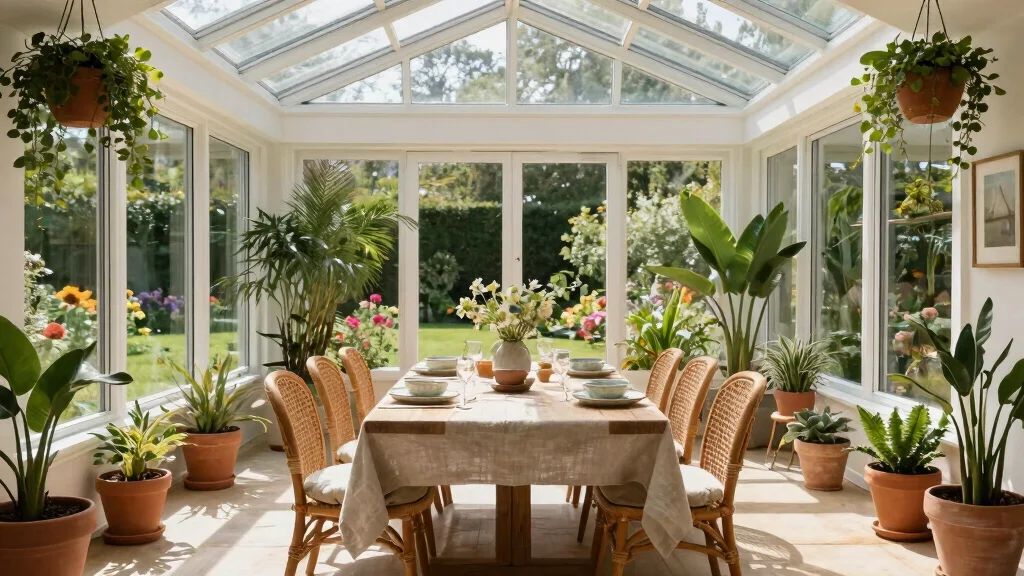
Creating a warm, inviting conservatory dining room filled with natural light is a dream for many homeowners. If you’re like me, you crave that perfect space where you can enjoy meals with family and friends, all while soaking in the beauty of nature. This post is crafted for those who appreciate home decor, especially eco-friendly ideas that bring the outside in. Whether you’re building a new conservatory or revamping your existing dining area, these twelve conservatory dining room ideas will inspire you to create a bright and airy space that reflects your style.
Imagine sipping your morning coffee under a canopy of greenery, surrounded by abundant natural light. If you love the idea of blending modern design trends with biophilic elements, this guide is for you. You’ll discover practical tips and stylish concepts that make your dining room a delightful haven. From using eco-friendly materials to layering lighting for that perfect ambiance, I’ve gathered a range of ideas that are vibrant, functional, and easy to implement. Get ready to transform your space into a natural light dining paradise!
Key Takeaways
– Biophilic Design: Incorporate natural elements like indoor plants to create a calming atmosphere that enhances your wellbeing and connects you to nature.
– Glass Accents: Use glass features, such as a large window or glass doors, to maximize sunlight and provide stunning views of your garden or outdoor space.
– Eco-Friendly Materials: Opt for sustainable materials in furniture and decor, ensuring your dining room is both stylish and environmentally friendly.
– Layered Lighting: Combine ambient, task, and accent lighting to create a warm and inviting atmosphere, perfect for both day and night dining experiences.
– Cozy Nook Creation: Design a small, inviting corner with soft textiles and comfortable seating where you can relax or enjoy intimate meals with loved ones.
1. Embrace Biophilic Design
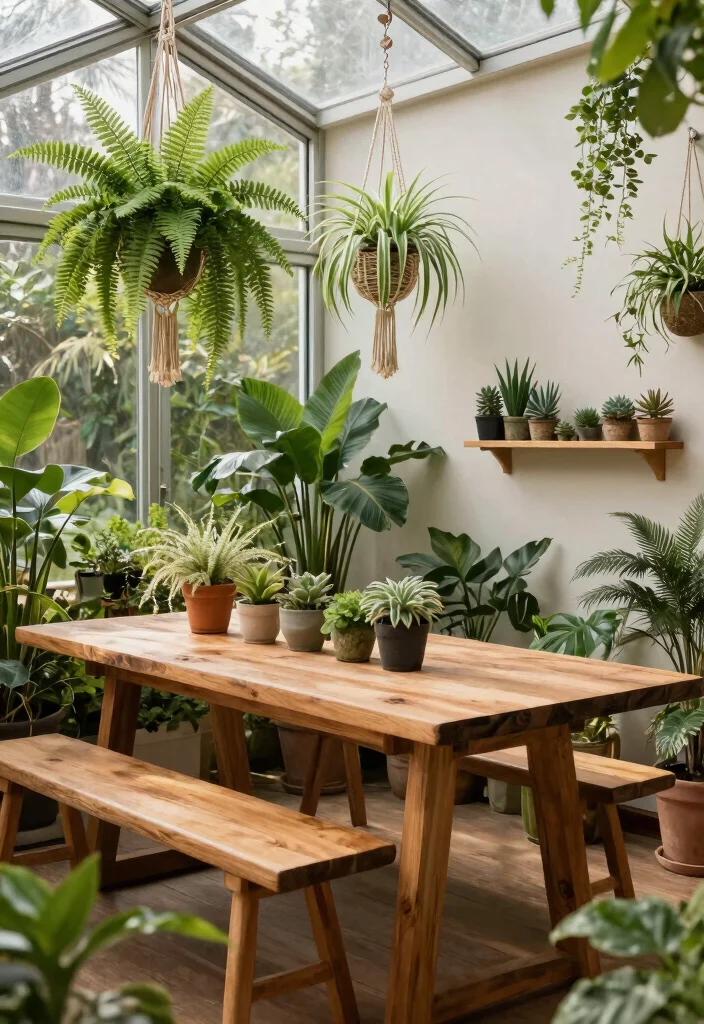
Biophilic design beautifully integrates nature into your home, creating a serene oasis in your conservatory dining room. By adding a variety of plants, such as lush ferns and hardy succulents, you can cultivate a vibrant atmosphere that not only pleases the eye but also enhances your well-being. Consider hanging planters or wall-mounted shelves to showcase your plant collection, making your space feel lush and inviting.
To implement this design principle, opt for low-maintenance plants like pothos or peace lilies that require minimal care. Varying the heights of your plant displays adds visual interest, while incorporating natural materials like wood and stone can further harmonize with the greenery.
Consider these ideas to enrich your biophilic design:
– Pair cascading ferns with wall-mounted plant shelves
– Install hanging planters near natural light sources
– Use reclaimed wood for plant stands or shelving
This design choice invites nature indoors, creating a refreshing dining area that fosters tranquility.
2. Go for Glass Accents
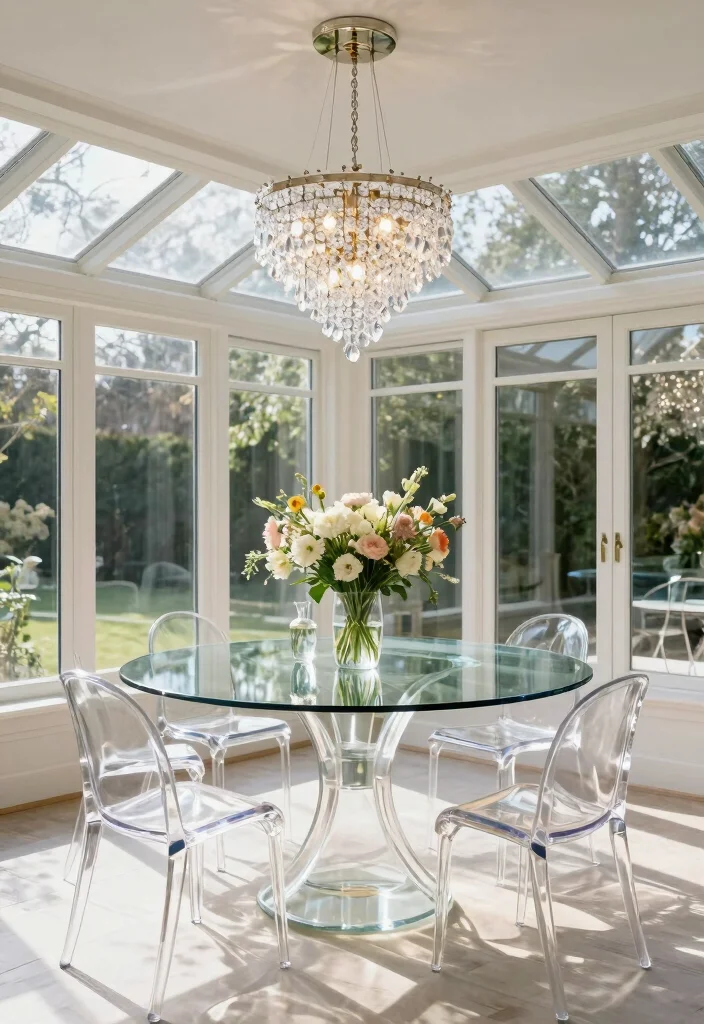
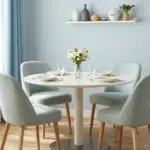
Glass accents can dramatically elevate your conservatory dining room, enhancing its elegance while ensuring that natural light pours in. Imagine a glass dining table, sparkling crystal chandeliers, or decorative glassware that glimmers in the sunshine. These reflective surfaces can amplify light, making your space feel open and airy.
For practical implementation, consider a round glass table to create a more spacious feel. Incorporate glass terrariums filled with small plants for a touch of nature, and choose glass pendant lights to add a sleek, modern vibe.
Explore these suggestions to incorporate glass accents:
– Install a glass dining table for an open ambiance
– Use glass terrariums to bring life indoors
– Choose pendant lights to illuminate the dining area
This design not only brightens your dining space but infuses it with a touch of sophistication.
3. Eco-Friendly Materials
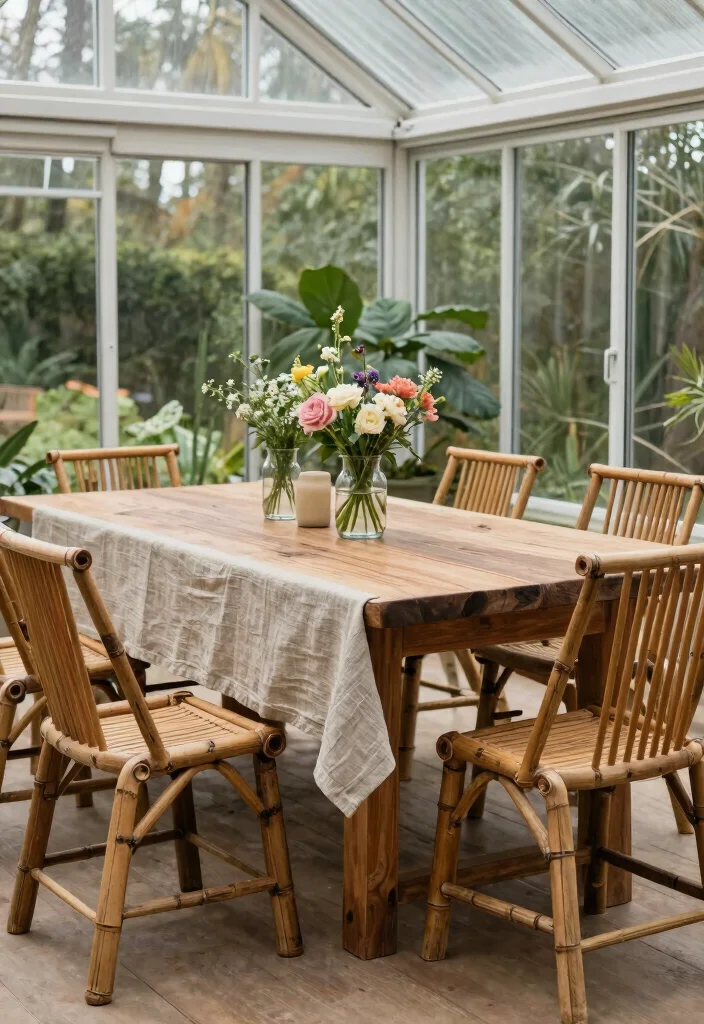
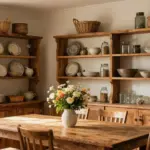
Incorporating eco-friendly materials in your conservatory dining room brings charm while promoting a sustainable lifestyle. Consider using reclaimed wood for furniture, bamboo for textiles, or recycled glass for decor. These choices not only reduce your carbon footprint but also add a unique, character-rich touch to your space.
Look for reclaimed wood dining tables to introduce warmth and history without compromising on style. Lightweight bamboo chairs are not only stylish but also durable, while organic cotton table linens can elevate your dining experience.
Explore these eco-friendly ideas:
– Opt for a reclaimed wood dining table for warmth
– Use bamboo chairs for durability and style
– Incorporate organic cotton linens for an eco-conscious touch
Designing with these materials creates a cozy, inviting space that reflects your values.
4. Bright Color Schemes
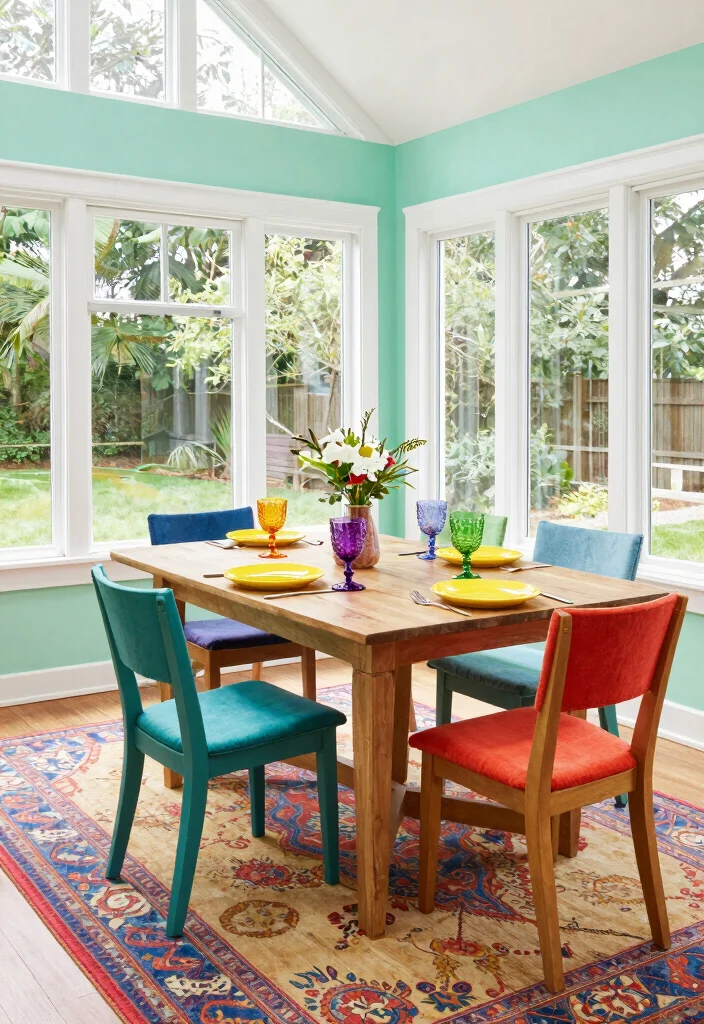
Bright color schemes can invigorate your conservatory dining room, making it feel lively and cheerful. From sunny yellows to soft greens, vibrant hues can enhance warmth and joy. Use colorful tableware, vivid wall art, or even painted furniture to infuse energy throughout the space.
When selecting colors, choose shades that resonate with your desired atmosphere; for example, yellow can evoke happiness. Balance bold colors with neutral tones to keep the space from feeling chaotic, and accent with cushions or rugs in complementary colors to tie everything together.
Consider these tips for brightening your space:
– Choose vibrant colors that spark joy
– Balance bold hues with neutral accents
– Incorporate coordinating cushions for a cohesive look
These lively colors stimulate the senses and beautifully reflect the outdoor environment.
5. Multi-Functional Spaces
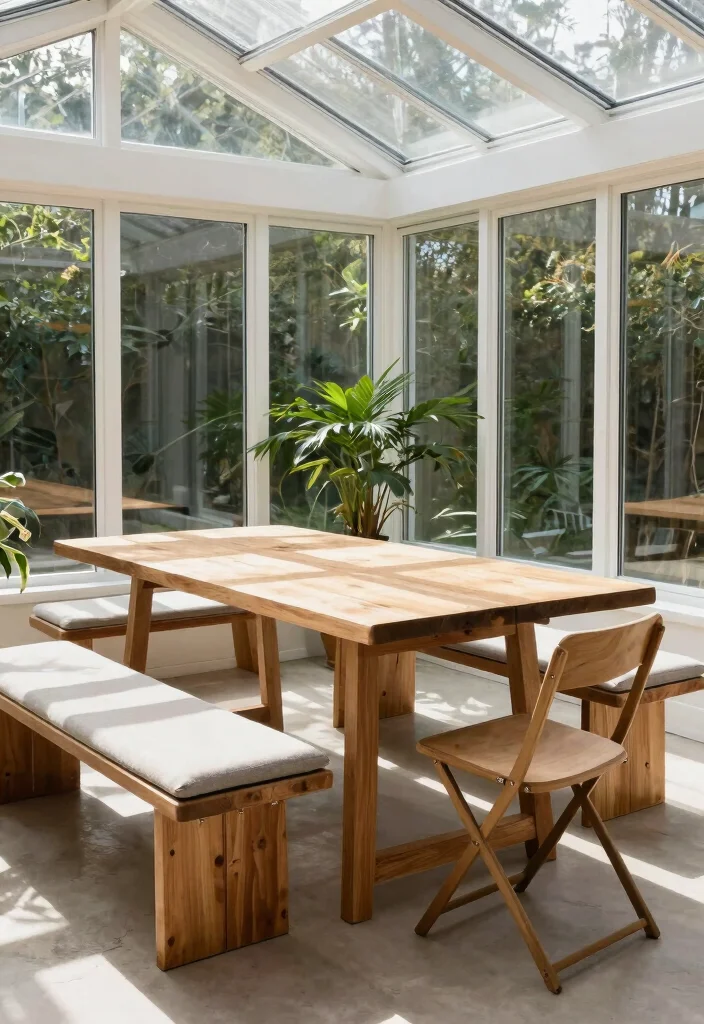
In smaller conservatories, maximizing space is crucial. Design your dining area to serve multiple purposes by combining dining with relaxation or workspace. A dining table that can transform into a workspace or a folding table that can be stored away creates versatility in your space.
Opt for stackable chairs to accommodate flexible seating arrangements. Consider adding a bench that serves various functions, and choose a dining table that allows for both dining and working comfortably.
Explore these practical suggestions:
– Use stackable chairs for flexible seating arrangements
– Incorporate a multifunctional bench for extra utility
– Choose a height-adjustable dining table for versatility
This approach ensures your dining room is not just for meals but a dynamic area for various activities.
In small conservatories, practical design wins every time. Tuck a folding table with stackable chairs into your dining area and it instantly doubles as a workspace or lounge—these conservatory dining room ideas are genuinely game-changing.
6. Layered Lighting
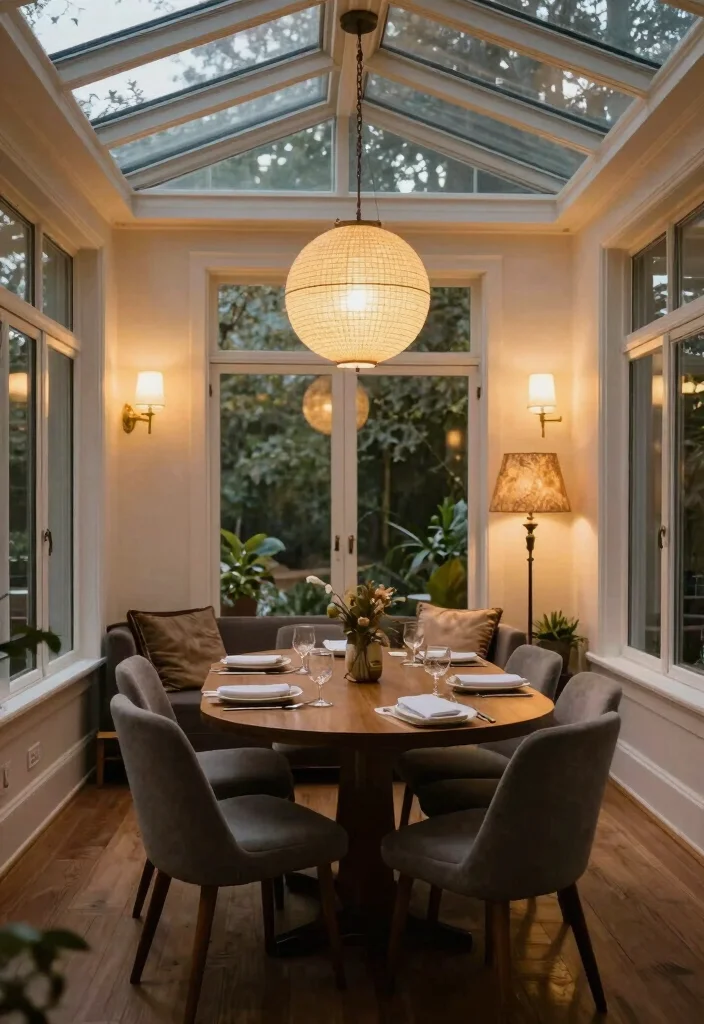
Layered lighting plays a crucial role in creating a cozy atmosphere in your conservatory dining room. By mixing natural light with various light sources, you can achieve a beautifully balanced ambiance that feels inviting. Dimmable overhead lights, task lighting, and decorative lamps can all contribute to a warm glow.
Use pendant lights or chandeliers to enhance the central dining area, and incorporate sconces on the walls for added dimension. Mixing natural daylight with soft, warm artificial lights creates a cozy retreat.
Consider these lighting tips:
– Use pendant lights to enhance the dining space
– Incorporate sconces for added ambiance
– Mix natural light with warm artificial lighting
This layered approach not only provides functional lighting but also enriches the overall aesthetic of your dining space.
Layered Lighting
Editor’s Choice




Key Trade-offs & Our Top Pick
When designing your conservatory dining room, you have various options to consider. Each approach has its pros and cons, so let’s break down a few popular choices to help you make an informed decision.
Option 1: Biophilic Design
– Pros:
– Creates a strong connection to nature, enhancing wellbeing.
– Incorporates natural materials and lots of plants, improving air quality.
– Cons:
– Requires consistent maintenance to keep plants healthy.
– Can be expensive if you opt for high-quality materials and plants.
– Best for: Anyone looking to create a calming and peaceful dining environment that promotes relaxation.
Option 2: Glass Accents
– Pros:
– Maximizes natural light, making the space feel bright and open.
– Modern and stylish, adding a contemporary touch to your dining area.
– Cons:
– Can lead to heat loss in colder months if not well-insulated.
– Requires regular cleaning to maintain appearance, especially fingerprints.
– Best for: Homeowners wanting a sleek, modern aesthetic that embraces transparency and light.
Option 3: Eco-Friendly Materials
– Pros:
– Supports sustainability by using recycled or responsibly sourced materials.
– Often durable, providing long-term value for your investment.
– Cons:
– Limited options may restrict your design choices.
– Sometimes more costly upfront compared to conventional materials.
– Best for: Eco-conscious individuals who want to reduce their carbon footprint while enjoying stylish decor.
Option 4: Layered Lighting
– Pros:
– Allows for versatile lighting options, creating different moods for various occasions.
– Enhances the aesthetic appeal of the dining space with various fixtures.
– Cons:
– Can increase energy costs if not managed properly.
– Requires careful planning to ensure all layers work harmoniously.
– Best for: Those who frequently entertain guests and want to create an inviting atmosphere.
Option 5: Multi-Functional Spaces
– Pros:
– Maximizes space, making your conservatory more practical for various uses.
– Encourages family interaction by combining dining with leisure activities.
– Cons:
– May feel crowded if not designed carefully.
– Requires clear zoning to keep activities separate and organized.
– Best for: Families or individuals who want a versatile living area that adapts to different needs.
Expert Recommendation:
Best Overall: Biophilic Design
This option is the top choice for most people because it brings nature indoors, which can greatly enhance your mood and wellbeing. You get great value for money as it combines aesthetics with health benefits. The versatility of incorporating various plants and materials allows you to customize your space according to personal taste. Plus, with proper care, biophilic design promotes long-term durability and enjoyment.
Why We Picked This:
While biophilic design suits many, those looking for a modern, sleek vibe may prefer glass accents. If sustainability is your focus, eco-friendly materials could be appealing. Layered lighting is perfect for social butterflies, while multi-functional spaces serve families best. Each option has unique advantages, so consider your lifestyle and priorities when making your choice!
7. Seasonal Decor
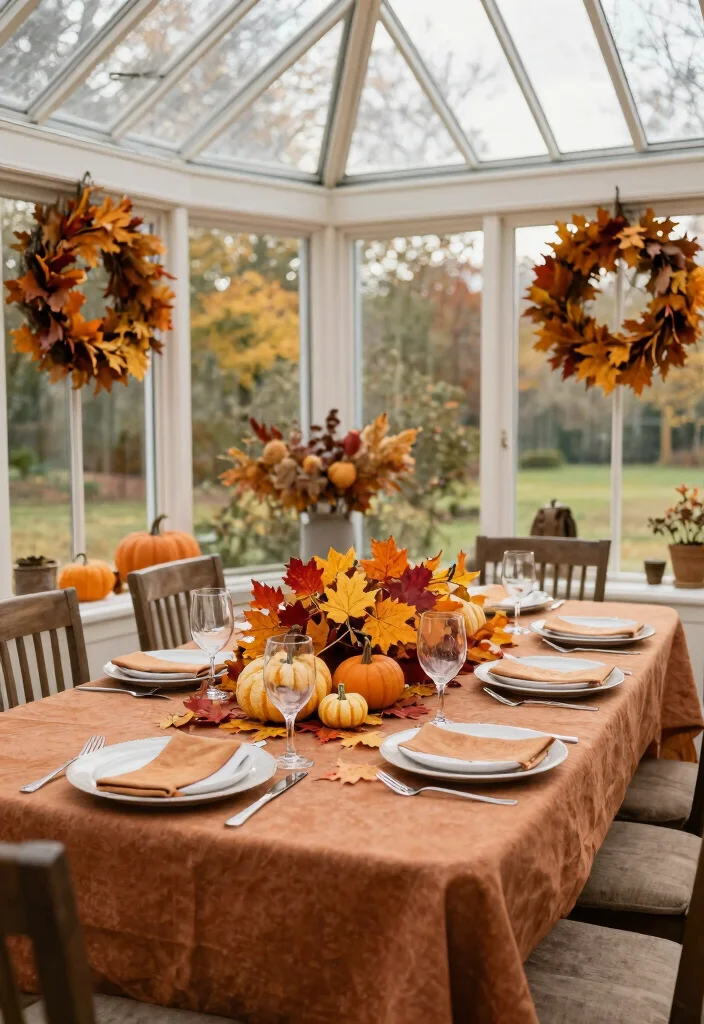
Seasonal decor keeps your conservatory dining room fresh and exciting throughout the year. Change centerpieces and table settings to reflect the season—think autumn leaves, winter pine cones, spring blossoms, or summer fruits. This not only adds dynamism to your space but allows for creative expression.
Incorporate seasonal flowers into your dining arrangements, and swap out table linens and napkins to match the seasonal colors. Creating seasonal wreaths or garlands can add a charming touch to your decor.
Explore these decor ideas:
– Use seasonal flowers for vibrant arrangements
– Change table linens to reflect seasonal colors
– Create wreaths or garlands for added flair
This approach keeps your dining area feeling vibrant and connected to the rhythms of nature.
Seasonal Decor
Editor’s Choice



8. Nature-Inspired Patterns
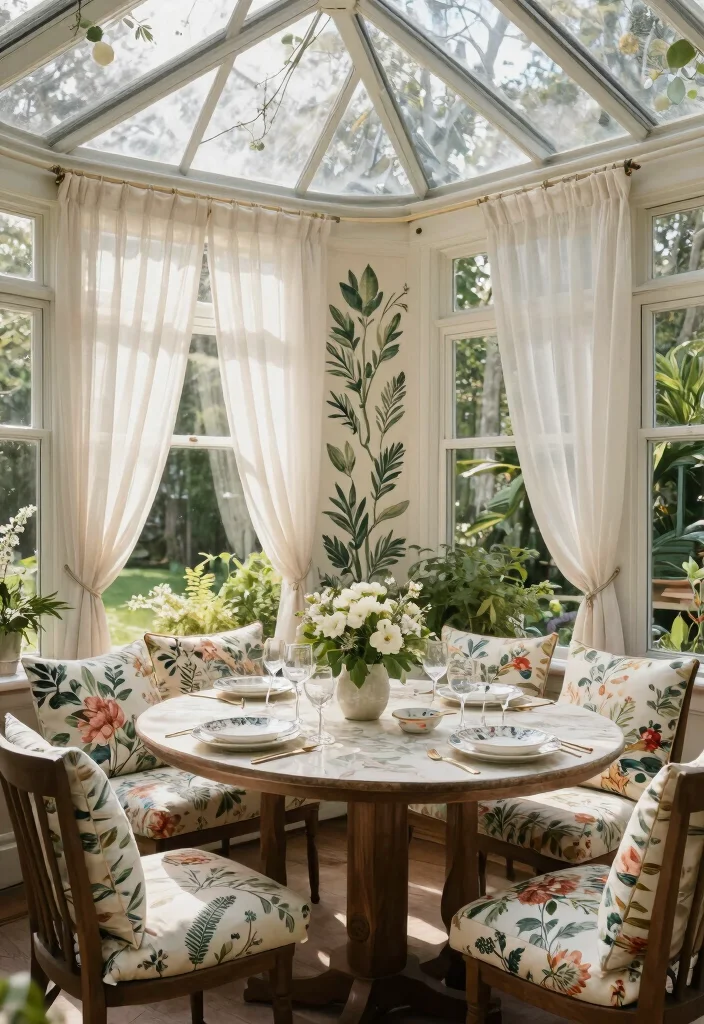
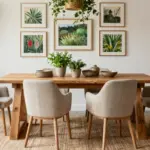
Nature-inspired patterns add unique charm to your conservatory dining room. Select wallpapers, textiles, or art that reflect natural elements like floral designs or leafy motifs. This connection to nature enhances the overall atmosphere and creates a tranquil dining experience.
Opt for floral-patterned cushions or drapes to introduce these elements, and adorn the walls with nature-themed artwork. Incorporating patterned tableware that ties into the natural theme can unify the space.
Consider these design suggestions:
– Choose floral-patterned cushions for a fresh look
– Use nature-themed artwork to enhance your walls
– Incorporate patterned tableware to connect with nature
These elements create a seamless blend of indoor beauty and the outside world.
Nature-Inspired Patterns
Editor’s Choice




9. Sustainable Furniture Choices
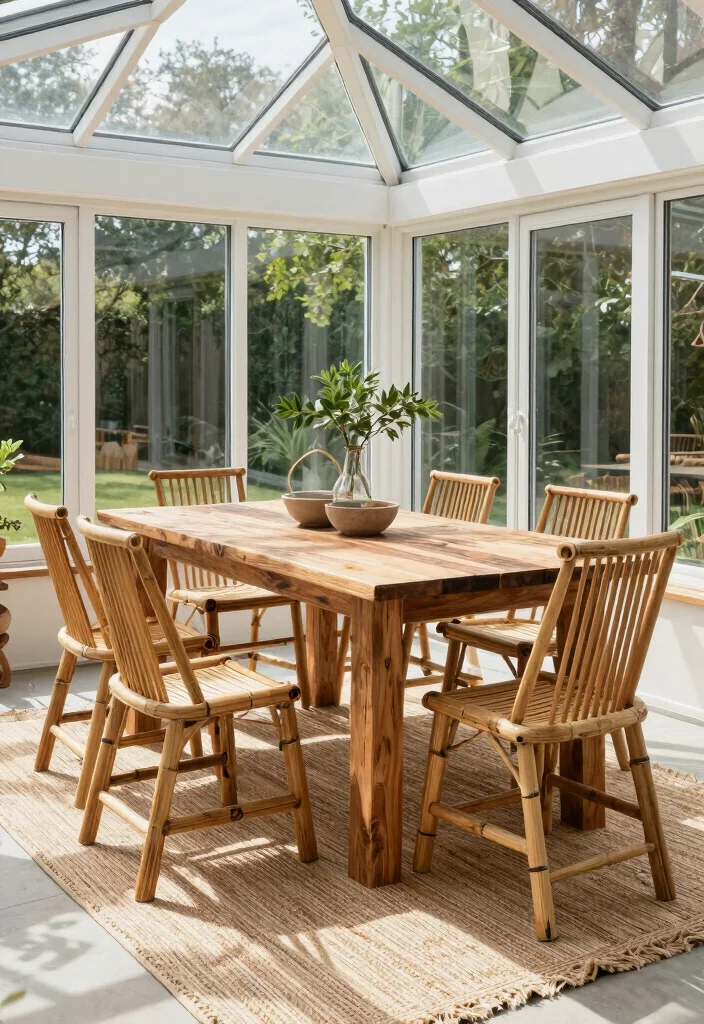
When selecting furniture for your conservatory dining room, prioritize sustainability. Look for brands that focus on eco-friendly furniture made from sustainable materials. Bamboo and reclaimed wood are stylish choices that also support environmental consciousness.
Research brands that emphasize sustainability in their production processes and seek out furniture certified by organizations like the Forest Stewardship Council (FSC). Prioritizing quality over quantity will reduce waste in the long run.
Explore these best practices:
– Research eco-friendly brands for furniture
– Seek FSC-certified pieces for sustainability
– Focus on quality to minimize waste
By making these conscious choices, you can furnish your dining room while being kind to the planet.
Sustainable Furniture Choices
Editor’s Choice


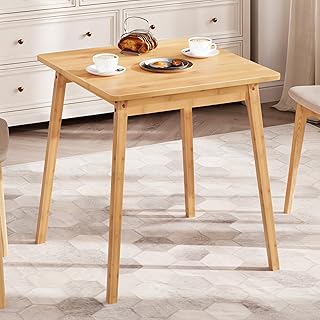

10. Create a Cozy Nook
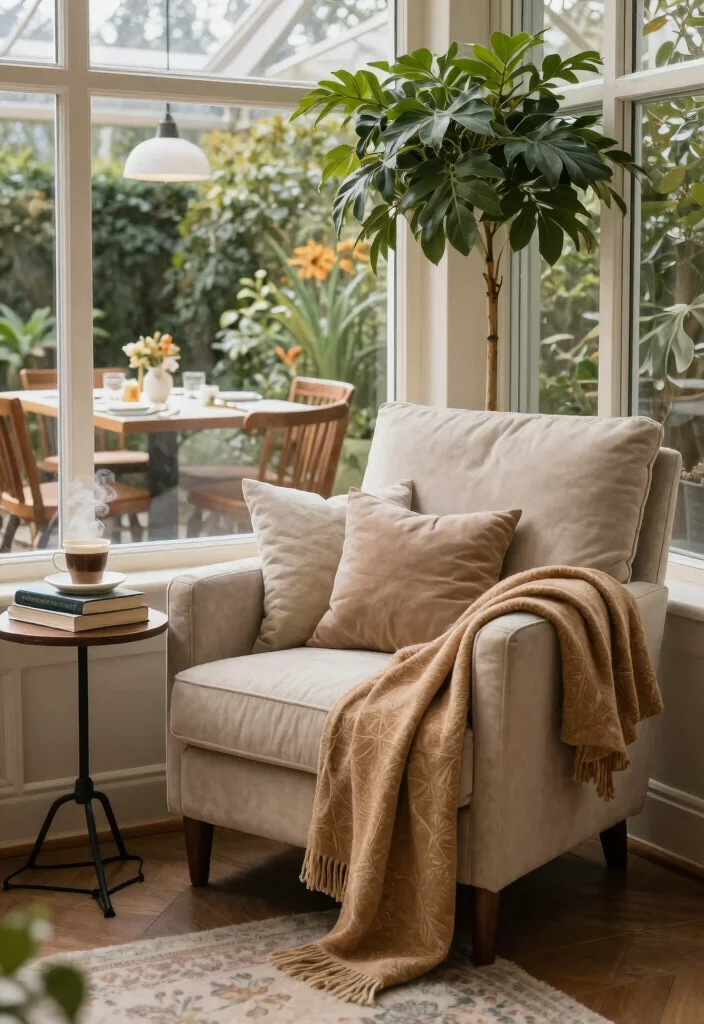
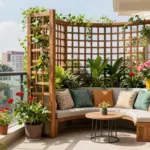
Creating a cozy nook in your conservatory dining room offers a relaxing retreat. This space could feature plush seating, a small coffee table, or a corner dedicated to enjoying your morning tea. Adding comfortable throws and cushions will enhance the inviting atmosphere while providing a perfect spot to unwind.
Incorporate a small loveseat or oversized chair for comfortable seating, and use warm blankets and soft pillows to create an inviting ambiance. Position the nook near a window to take advantage of natural light.
Consider these cozy nook ideas:
– Include a loveseat for comfortable seating
– Use warm blankets for added coziness
– Position the nook by a window for light
This nook can become your favorite place for reading, sipping coffee, or simply enjoying a quiet moment.
Create a Cozy Nook
Editor’s Choice


11. Use Soft Textiles
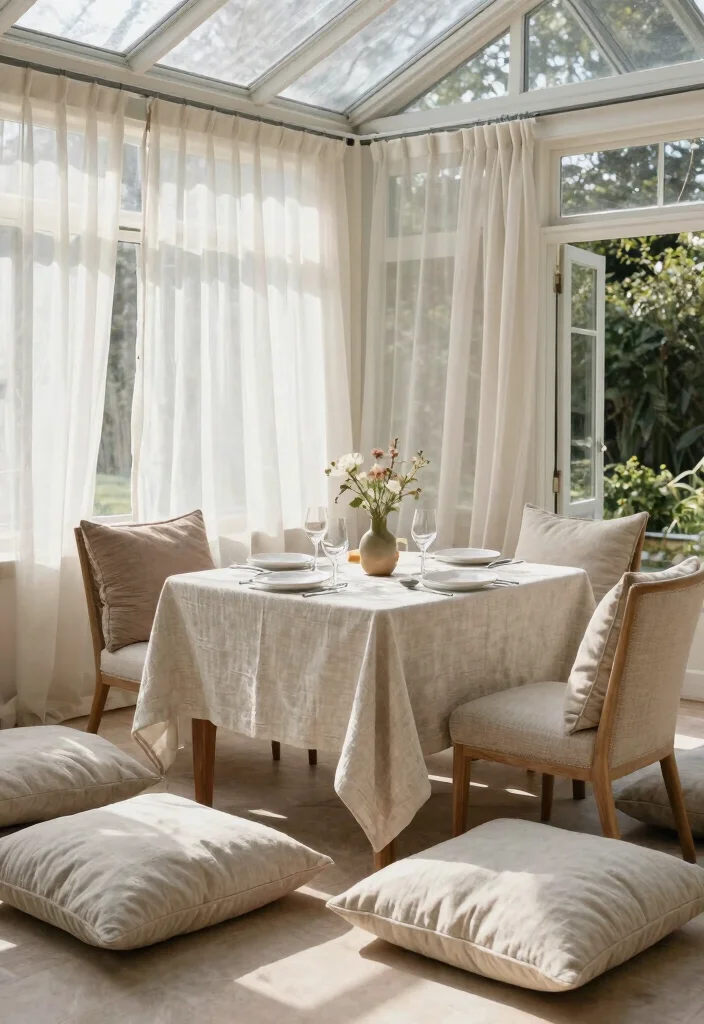
Incorporating soft textiles into your conservatory dining room enhances its warmth and comfort. From table runners to curtains, these materials can create a more inviting atmosphere. Experiment with natural fabrics like cotton, linen, and jute for both aesthetic appeal and eco-friendliness.
Layer different textures to create a rich, inviting look, and choose light colors to maintain an airy feel while still adding warmth. Floor cushions or poufs can provide additional seating options, enhancing comfort during gatherings.
Explore these textile tips:
– Layer textures for a rich look
– Choose light colors for an airy feel
– Use floor cushions to enhance seating options
These touches will make your dining space not only beautiful but also inviting and comfortable for all your gatherings.
Did you know 2–3 layers of soft textiles—cotton runners, linen curtains, and jute cushions—can instantly warm a conservatory dining room? This eco-friendly idea is easy to implement: mix fabrics in light colors and add floor cushions for flexible seating, a staple of conservatory dining room ideas.
12. Focus on the View
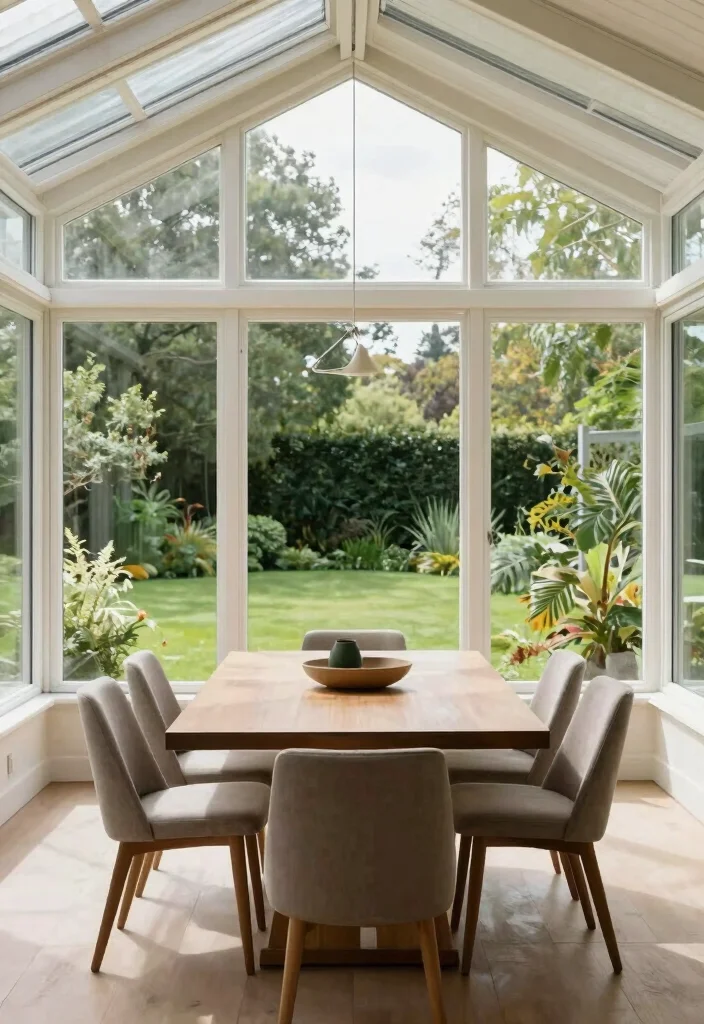
One of the greatest features of a conservatory is the stunning views it often showcases. Arrange your dining area to make the most of the landscape outside. Position your dining table to face the best view, and keep decor minimal to avoid distracting from the natural beauty beyond.
Keep window treatments light to maximize visibility, and choose outdoor plants that can be admired from inside. Avoid heavy furniture that obstructs the view, allowing the outside scenery to become part of your dining experience.
Consider these viewing tips:
– Keep window treatments light for visibility
– Choose outdoor plants visible from inside
– Avoid heavy furniture that blocks views
By emphasizing the view, you create a beautiful backdrop that enhances every meal.
Fun fact: In a conservatory dining room, facing your best view can make the space feel 20% larger, and natural light does most of the work. Keep decor minimal and blinds light to let the outside scenery become part of your meal.
Conclusion
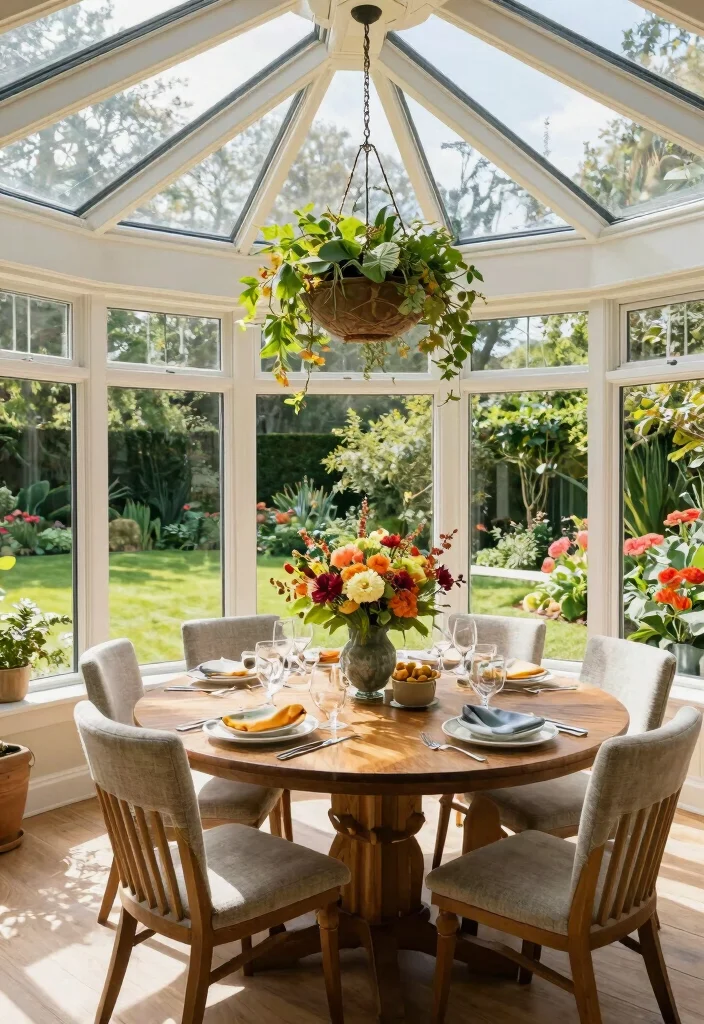
Designing a conservatory dining room filled with natural light opens up a world of creative possibilities. By integrating elements of nature, sustainable materials, and vibrant colors, you can create a space that not only looks beautiful but feels inviting. Embrace these eco-friendly ideas to transform your dining experience, making it a harmonious blend of indoor comfort and outdoor beauty.
Let your conservatory become a reflection of your lifestyle, where every meal is an opportunity to connect with nature and enjoy the light.
Note: We aim to provide accurate product links, but some may occasionally expire or become unavailable. If this happens, please search directly on Amazon for the product or a suitable alternative.
This post contains Amazon affiliate links, meaning we may earn a small commission if you purchase through our links, at no extra cost to you.
Frequently Asked Questions
What are some conservatory dining room ideas to maximize natural light and create bright dining spaces?
Maximizing natural light in a conservatory dining space starts with a glass-forward layout and minimal obstructions around windows. Keep heavy furniture away from walls to prevent shading the room, and consider skylights or a light well if possible.
Choose light-toned paints, a pale dining table, and reflective surfaces (glass, mirror, glossy ceramic) to bounce daylight deeper into the space. For shading, use sheer or UV-filtering blinds rather than heavy drapes so sunlight can still pour in.
To keep it eco-friendly, select energy-efficient glazing and sustainable materials, and add indoor plant decor to boost air quality and brightness. These are classic conservatory dining room ideas that create a bright dining room inspiration in any home.
How can I design an eco-friendly conservatory dining room?
Start with sustainable materials: reclaimed wood for furniture, bamboo chairs, and fabrics made from organic fibers. Choose energy-efficient glazing and consider shading options that minimize heat gain in summer and retain warmth in winter.
Apply conservatory design ideas that emphasize flexibility—modular seating, versatile storage, and a layout that can adapt for everyday meals or entertaining. Fill the space with indoor plant decor to improve air quality and bring nature inside without adding clutter. Use low-VOC paints and sustainable textiles to keep the look cohesive and environmentally friendly.
Which indoor plant decor works best in a conservatory dining space?
Near-bright windows, high-light-loving plants thrive. Try a mix of sculptural options like a tall fiddle leaf fig or rubber plant, plus trailing favorites like pothos or string of hearts to soften edges. For diners, keep plants off the table and on pedestals or shelves to prevent spills. Group them in a dedicated corner to create a living focal point that’s easy to care for with bright, indirect light and regular humidity. With indoor plant decor, you’ll have a thriving greenscape that complements natural light dining spaces and conservatory dining room ideas.
What are the latest modern dining room trends for conservatories?
Modern dining room trends for conservatories lean toward biophilic design: plenty of plants, natural textures, and daylight-first layouts. Pair warm woods or rattan with airy neutrals, and keep furniture modular so the room can host casual breakfasts or formal dinners. Use energy-efficient lighting and minimal clutter to honor the light-filled space. Add a statement piece in metal or stone, but let the glass and greenery stay the stars. These ideas align with modern dining room trends and give you fresh conservatory design ideas.
How can I create bright dining room inspiration in a conservatory while staying comfortable year-round?
Bright dining room inspiration comes from balancing glare control with warmth. Install UV-reducing blinds or shades that can be raised completely on sunny days. Use a light, reflective color palette and choose flooring and rugs that feel cool in summer but cozy in winter. Add a layered lighting plan for evenings—overhead LEDs, pendants, and warm table lamps. For comfort, consider underfloor heating or cushioned dining chairs, and place seating to maximize views without creating heat pockets. Combine these with indoor plant decor and natural light dining spaces to keep the space vibrant and welcoming all year.